

She Chooses the Words She Keeps
A girl with a ponytail sits over her workbook in a Thai primary classroom. Her pencil stops above a word she has not seen before. She marks it. Two lines later, a sentence catches her attention. She marks that too.
Her teacher does not hand her a list of words to keep. On this page, she decides what is worth carrying forward.
The list belongs to the child
Primary Advantage is foundation-building extensive reading for grades 3 to 6 English. Each printed workbook holds 14 lessons, and every lesson follows the same 13 printed steps.
The structure is clear. The choices inside it are personal.
During Read the Article, the page gives her four reading marks: new word, confusing, interesting, and save sentence. In step 4, Collect Vocabulary, she chooses which marked words enter her flashcard deck. In step 6, Collect Sentences, she keeps the sentences she wants to work with.
Step 2, Key Vocabulary, gives the whole class the same first words. Her own collection grows from what she notices as she reads. The teacher does not impose that personal list.
This is Student Agency, the second pillar of the Big 4 classroom-fidelity protocol. Its principle is direct: students, not teachers, drive vocabulary selection and reading-level choice.
Agency also changes what happens after a wrong answer. She goes back into the article for evidence. She does not search the teacher's face for the preferred answer. The text becomes the place where she can test her thinking.
Choice gives reading a reason
Extensive reading runs on motivation. A child who chooses which words to learn has a stake in the work. That stake supports the reading volume the method needs.
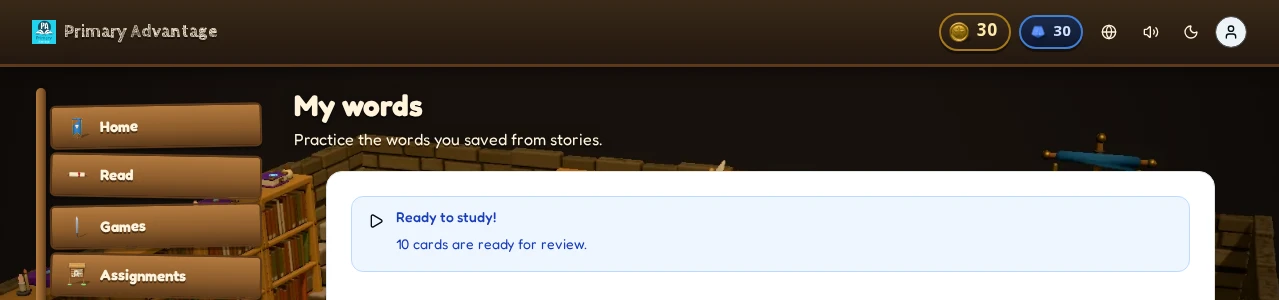
The app's My words page keeps her collected words together for practice. Her choices do not disappear when the lesson ends. They become a page she can return to, built from her own reading.
The teacher keeps a clear job. She protects the fixed lesson structure, guides the child back to the text, and makes room for real decisions. The adult holds the frame. The child fills it.
Today her words. Next her story.
Today's printed lesson sets the article for the class. What the child chooses today is which words and sentences she marks and collects.
We are building toward the next choice: a child selecting her next story from a set at her level. Mastery Advantage is entering Primary Advantage through tagged content. That work moves the vision forward.
Picture the P3 classroom we are building toward. A child finishes one story and looks through the stories ready for her. She chooses the one she wants. No waiting for an adult to decide what every reader must do next.
First a word. Then a sentence. Then a story.
That is how reading starts to belong to her.
See how a Primary Advantage lesson works: https://www.reading-advantage.com/en/products/primary-advantage
Want to talk to our team?
We'd love to answer your questions and help you find the right solution for your child.
Contact UsYou might also like
Every Lesson Has a Next Lesson
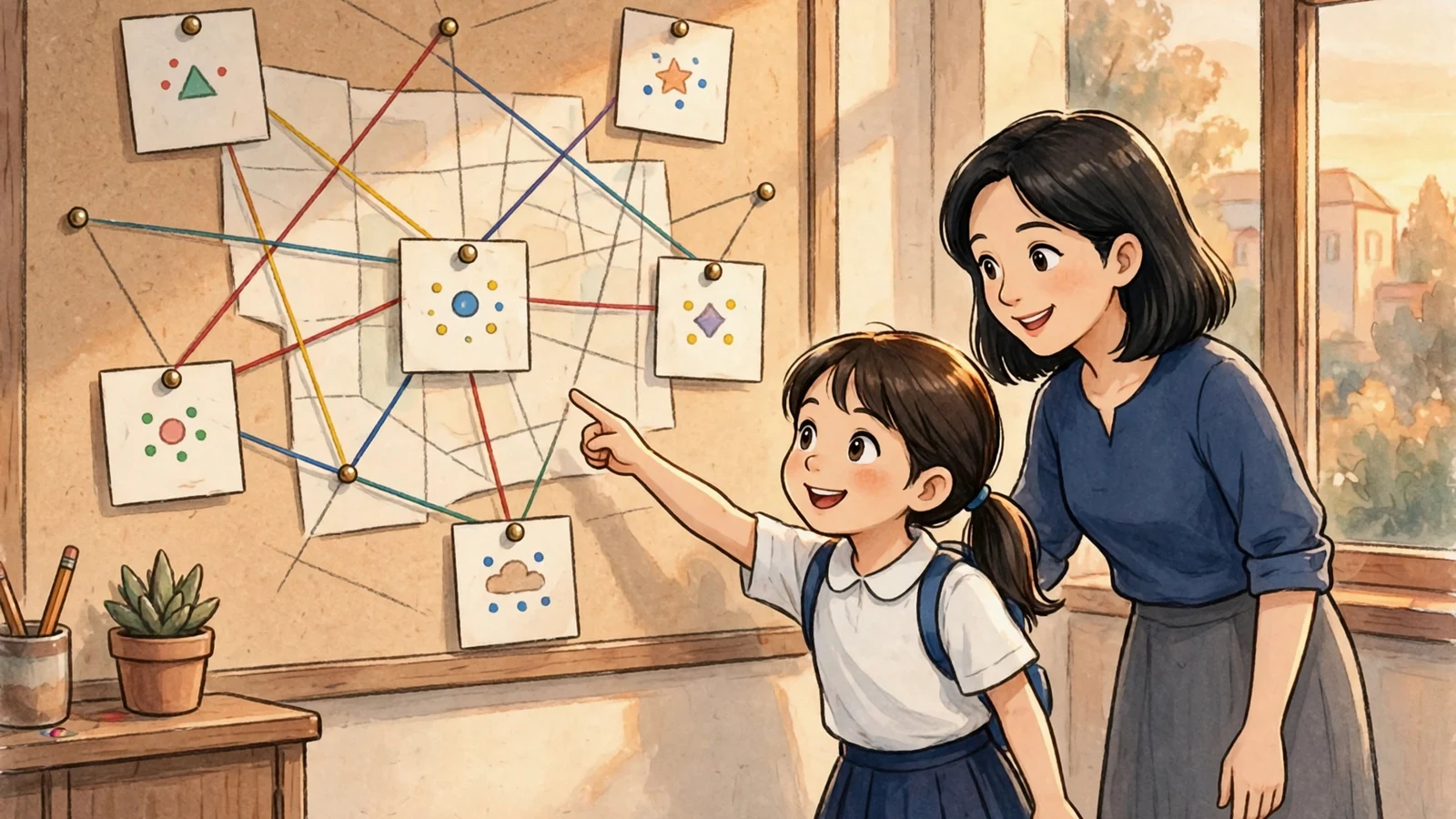
A parent asks what comes next. A map of skills gives the teacher, the child, and the family a clear answer.

Her Pencil Stops. The Tablet Stays Closed.
A P4 child writes, crosses out, and tries again before the app gives feedback on her own sentence.

The Line That Settled the Class
A P5 class disagrees. The teacher sends everyone back to the text, then uses class reports to choose the next child to help.